
How EVVA steers its production in real time.
NAVAX is helping the Austrian manufacturer of locking systems move to reliable, digital production planning. With PIA, a shop floor app built on the Power Platform, everyone involved sees orders, priorities and KPIs in one place, from the shop floor to senior management.
- Customer
- EVVA
- Industry
- Manufacturing
- Solution
- Apps · Business Intelligence
- Topics
- Automation
- Challenge
There was no central order control across eight departments: order documents and schedule changes were passed on by hand. The Power BI data model could be refreshed at most eight times a day, and KPIs were evaluated manually.
- Solution
One central app for order control in which changes are instantly visible to everyone. In the production app PIA, employees see all orders updated every 2–3 seconds; processes and KPIs live in Power BI dashboards.
- Result
Information flows in real time, lead times go down and delivery dates are met. Reporting runs fully automatically and gives management a consistent basis for decisions.
- 2,000
- confirmations from the shop floor in the first four months
- 3 sec.
- until the next update of the orders
- 8
- departments work with the same order control
- 0
- manual queries instead of 15 a day
From shouting and paper to digital order control.
Three bottlenecks in a production operation with more than 700 orders a day, and what EVVA does differently today.
From Excel to a production app.
EVVA had started improving things on its own. Together with NAVAX, this became a production-critical application.
- Start
First steps in Excel
Even before contacting NAVAX, EVVA built an order overview in Excel itself. Its possibilities were quickly exhausted.
- Interim
Data model in Power BI
The data model was rebuilt in Power BI and shown on large displays in production. Real time was technically impossible, with at most eight refreshes a day.
- Project
PIA with NAVAX
Because of NAVAX's production expertise and a joint ERP project, EVVA commissioned NAVAX. The result was a data warehouse, the Power App PIA and Power BI dashboards; EVVA wrote the prioritization algorithm, and NAVAX made it efficient enough for real time.
- Rollout
Department by department
PIA was introduced in the departments step by step. Initial skepticism turned into the question of when the solution would be available at every workstation.
Successfully in use since July 2020, with 70 users.
EVVA in pictures.
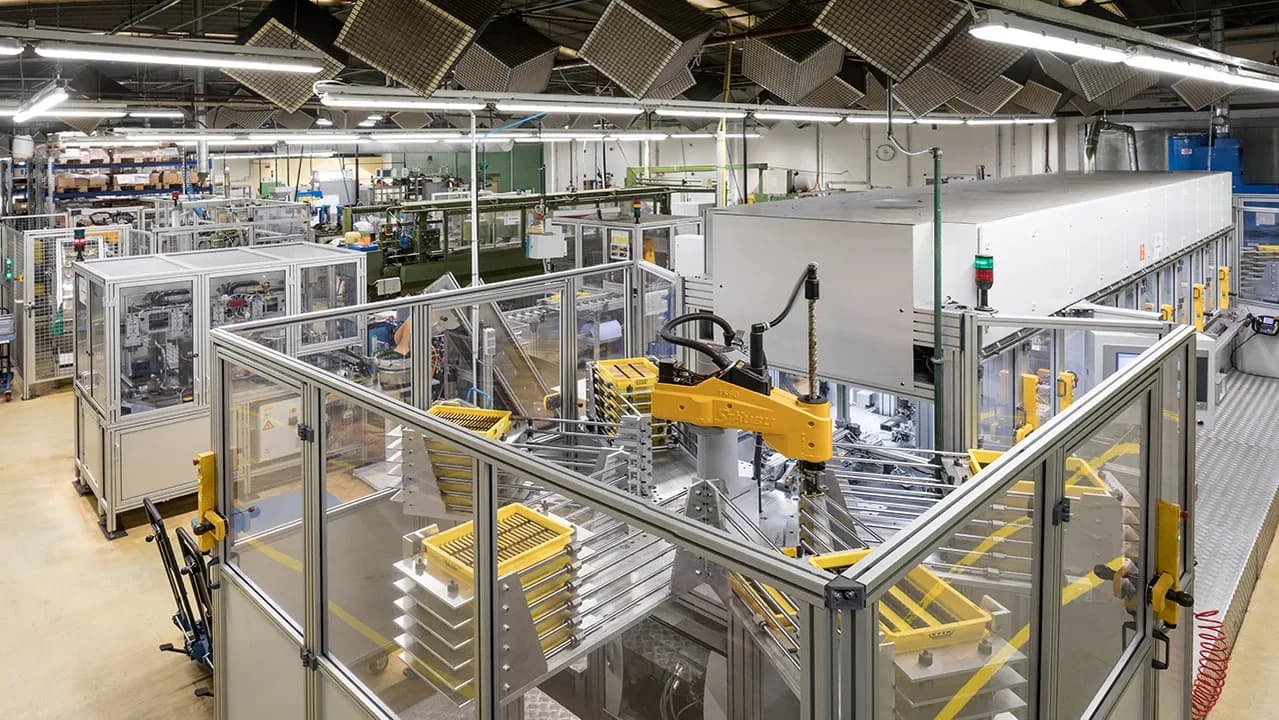
- 1More than 700 orders pass through EVVA's production every day.
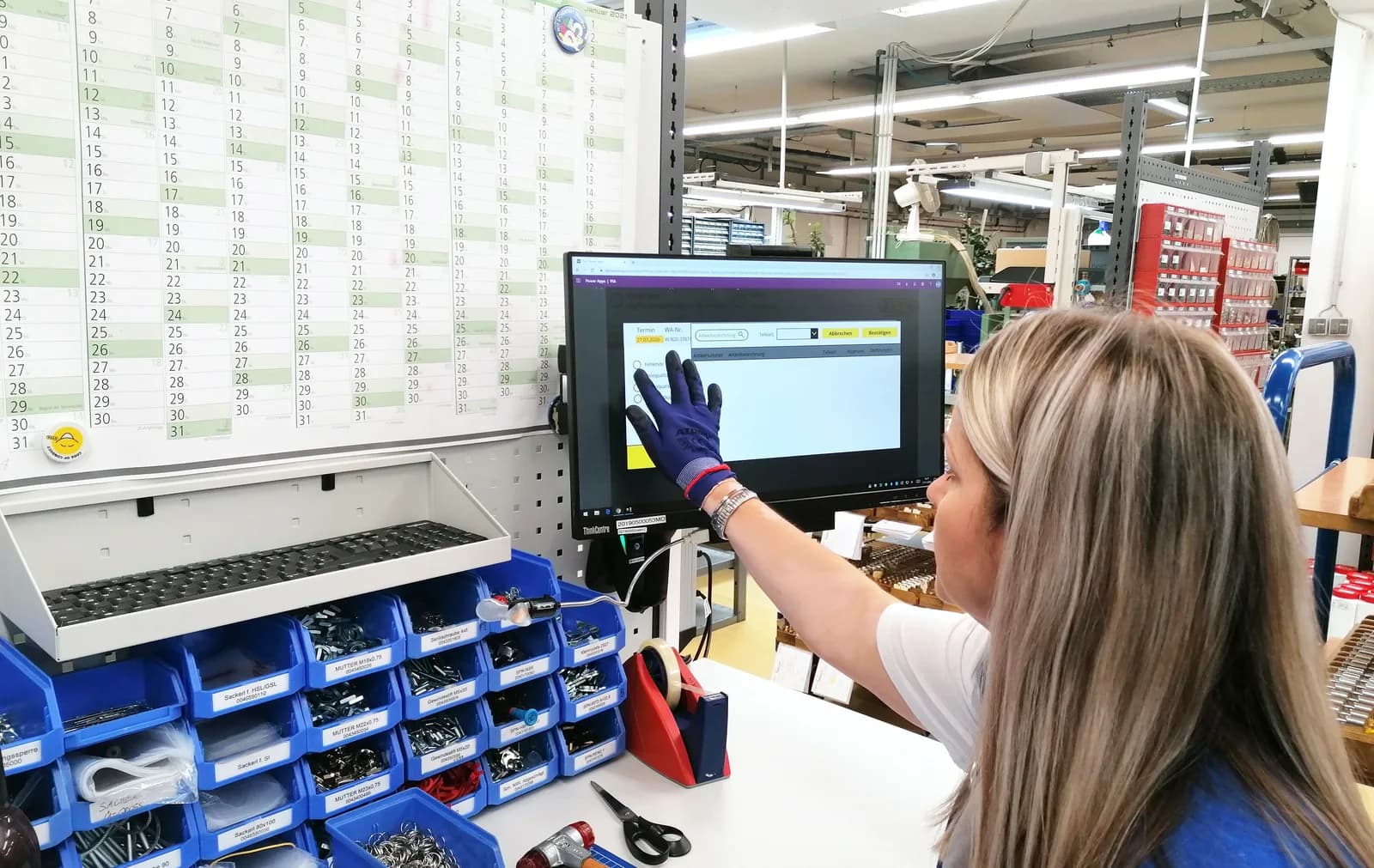
- 2On the shop floor: confirmations go straight into PIA, and the next work steps appear immediately.
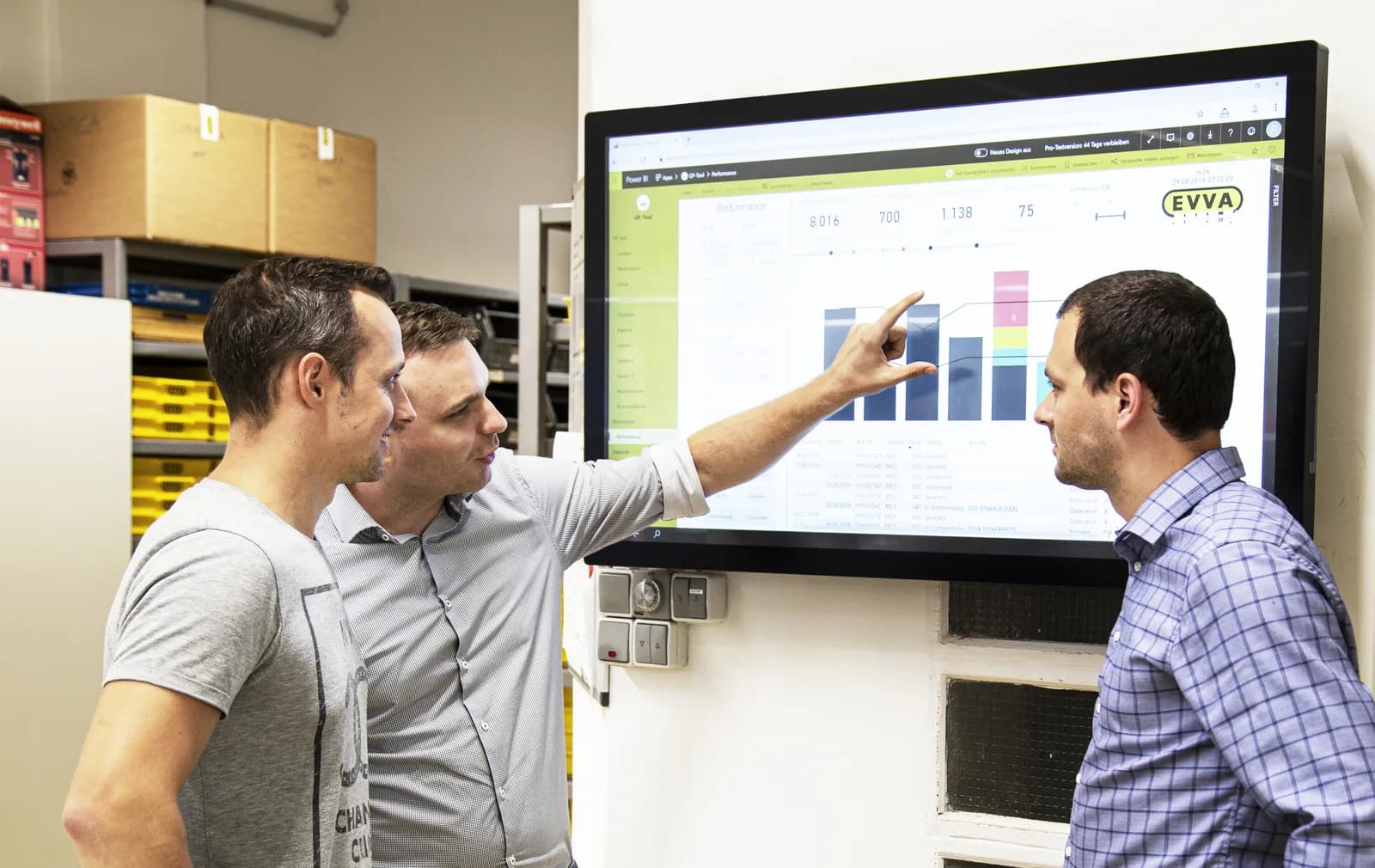
- 3Operational KPIs in Power BI as a basis for decisions.
“One of the effects that struck me most, and still does: the office has become quieter. The people involved know what they have to do, work in a coordinated way, and no longer constantly call or walk across the hall to get information. Structured work is now much easier, and we have been able to move away from the classic organization by shouting across the room. The gain in transparency is enormous, whether for the shop floor, production management or senior management.”

How well can your production see its own orders?
Transparency in production is rarely a question of software alone. It is a question of the data basis and of the paths information takes. Four points to check where you stand.
About EVVA.
EVVA develops and produces mechanical and electronic access control systems. For more than 100 years, the family-owned company has stood for high quality and customer-focused innovation as a manufacturer of and contact for security products.
Worldwide, 12,500 customers in more than 50 countries rely on EVVA's dependable, sustainably produced systems. State-of-the-art technologies and continuous development are clearly at the center of what EVVA does.
- 1919
- founded, family-owned ever since
- 750
- employees
- 382
- patents
- 12,500
- customers in more than 50 countries
What changed for others.
- Professional ServicesTheobald SoftwareCRM modernized on Dynamics 365: consolidated data as the basis for AI in sales.Read the story
- Online marketplacewillhabenThree legacy CRM systems replaced: five sales units work on one platform.180,000 records cleansed and migrated
- Retail · MicronutrientsBiogenaERP and CRM connected: 360-degree profiles and marketing automation for more than 500,000 customers.500,000+ active customers in the cloud-based CRM
Want more transparency in your production?
We look at how orders, confirmations and KPIs flow in your company today and show how an app and Power BI can bring them together.